










Contents
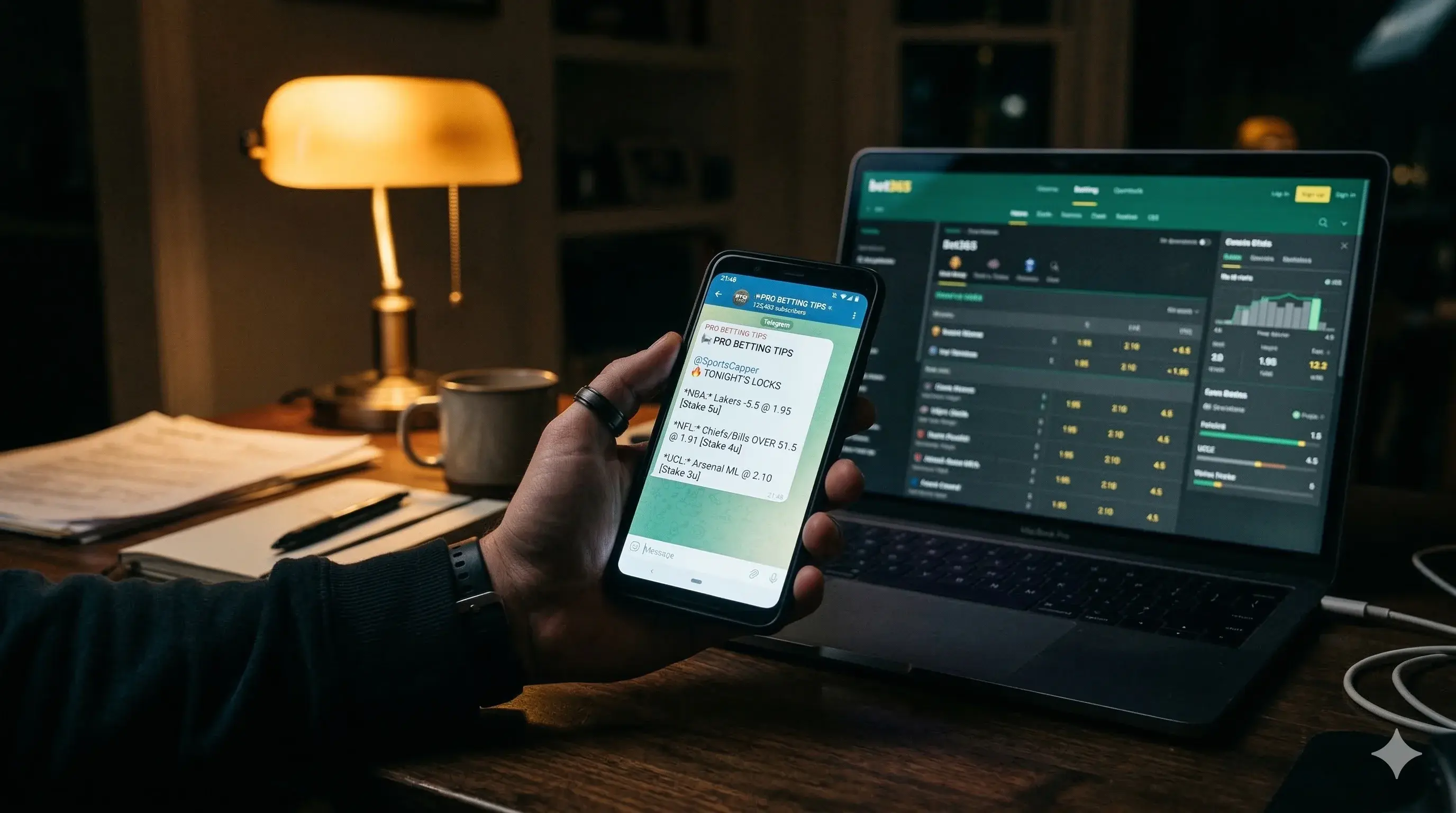
You open Telegram and there it is, a channel with 50,000 subscribers, a pinned message claiming "78% win rate, 412-115 lifetime record," and a $199/month subscription link. On Twitter, another account posts winning ticket screenshots daily. Your group chat swears by "this capper on Discord who's been hitting everything."
So what exactly is a capper, can you trust any of them, and how do you tell the real ones from the scammers? A capper is anyone who provides sports betting predictions, but in 2026, the term covers everyone from sharp analysts with verified track records to social media fraudsters deleting their losses. This guide breaks down the capper ecosystem and gives you the tools to evaluate any capper yourself.
By the end, you'll know the difference between a capper, a handicapper, and a sharp, plus how to spot scam cappers before they cost you money. We also built a free red flag checker tool that evaluates any capper's claimed stats.
TL;DR, Capper Explained
Key Facts at a Glance
| Factor | Details | Why It Matters |
|---|---|---|
| What they do | Provide sports betting predictions (picks) | The pick is only as good as the analysis behind it |
| Origin | Slang for "handicapper" | Social media shortened the term |
| Break-even WR | 52.4% at -110 odds | Below this, every capper loses money |
| Legit ROI range | +3% to +8% | Not the 30%+ that Telegram channels claim |
| Red flag WR | >62% claimed | Mathematically unsustainable over 500+ picks |
| Sample size | 500+ picks minimum | Fewer = statistically meaningless |
| Info-capper ROI | -1% to -5% | Most paid pick sellers lose money long-term |
Bottom line: "Capper" is just slang for someone who makes betting predictions. The word itself is neutral, but 90% of the people calling themselves cappers on social media are either unverified or outright fraudulent. The math doesn't lie: use our red flag checker before trusting anyone.
Capper Definition, What Does "Capper" Mean?
A capper is someone who analyzes sporting events and provides predictions, also called "picks", to other bettors. The term is informal shorthand for "handicapper" and is primarily used in social media betting culture on Twitter, Telegram, Discord, and TikTok.
Here's the key distinction: while handicapper is the industry-standard term used by sportsbooks, verification platforms, and the professional betting community, capper is the street version. Same activity, different vibe. Think of it like "doctor" vs "doc", except in the capper world, many of the "docs" never went to med school.
Where Does the Term "Capper" Come From?
The word traces back to horse racing. "Handicapping" originally meant assigning weight to faster horses to equalize the field. By the 1980s, sports bettors who analyzed games were called handicappers. As social media betting culture exploded in the 2010s, the community shortened it to "capper."
In the Russian-speaking betting community (CIS countries), "каппер" (kapper) became the dominant term even earlier, Telegram betting channels popularized it across Eastern Europe before it spread to English-speaking Twitter and Discord in 2018-2020. In 2026, "capper" is the default term on social media, while "handicapper" remains the professional standard used by oddsmakers and verification platforms.
Types of Cappers in Sports Betting
Not all cappers are the same. The type directly determines their likely ROI, and whether you should trust their picks.
Professional Handicappers (Pros)
The top 1% of cappers. Professional handicappers:
- Maintain 3-8% ROI over 1,000+ verified picks
- Use proprietary statistical models and data pipelines
- Have verified records on third-party platforms (BetStamp, Covers)
- Bet into sharp sportsbooks (Pinnacle, Circa) at high limits
- Rarely sell picks, their edge comes from market anonymity
These are the cappers who could make a living from betting alone. Most don't advertise on Telegram.
Paid Pick Sellers (Info-Cappers)
The most common and most problematic category. Info-cappers:
- Sell picks via subscriptions ($50-$500/month) or pay-per-pick
- Make money from subscriptions, not from betting
- Advertise heavily on social media with cherry-picked results
- Often claim 60-70%+ win rates (mathematically impossible long-term)
- Average -1% to -5% ROI when independently tracked
The term "info-capper" exists specifically because their business is information (selling picks), not betting. If a capper's primary income is subscriptions, ask yourself: why aren't they just betting bigger with their own bankroll?
Media and Celebrity Cappers
These cappers built a following through content, not results:
- Sports media personalities, podcasters, YouTubers
- Ex-athletes and coaches turned pick sellers
- Monetize through sponsorships, affiliate deals, and ad revenue
- Picks are secondary to entertainment value
- Typical ROI: -3% to -7% (worse than random in many cases)
They're entertaining, but following their picks is like taking investment advice from a stand-up comedian.
Social Media Tout Cappers
The lowest tier. Social media touts:
- Post picks on Twitter/Instagram/TikTok/Telegram for engagement
- Only show winning tickets (delete or hide losses)
- Monetize through affiliate links to sportsbooks
- No accountability, no verified records
- Average -5% to -12% ROI
- Use fake subscriber counts and bot engagement
| Capper Type | Typical Annual ROI (%) |
|---|---|
| Professional Model-Based | 8.5 |
| Syndicate Capper | 5.0 |
| Independent Sharp | 3.5 |
| Paid Pick Seller (Info-Capper) | -1.5 |
| Media/Celebrity Capper | -5.0 |
| Social Media Tout | -9.0 |
What Does a Capper Actually Do?
Behind the picks, a legitimate capper's daily workflow involves serious research. Here's what separates real analysis from coin flips.
Sports Analysis and Research
A capper's core job is finding spots where the sportsbook's odds are wrong:
- Analyze team and player statistics (efficiency ratings, recent form, situational splits)
- Study injuries and their impact on win probability
- Track line movements to identify where sharp money is going
- Compare public betting percentages against line direction (reverse line movement)
- Build or maintain statistical models, anything from spreadsheets to Python-based ML pipelines
Line Shopping and Value Finding
Even the best analysis is worthless without value in the odds:
- Compare odds across 5-10+ sportsbooks to find the best price
- Calculate implied probability vs estimated probability to find value bets
- Track closing line value (CLV), did the line move in their direction after they bet? (CLV calculator)
- Monitor margin differences between books to find soft lines
Bankroll Management Advice
Responsible cappers also manage risk:
- Recommend unit sizes based on confidence level (typically 1-5 units)
- Apply Kelly criterion or fractional Kelly for optimal bet sizing (Kelly calculator)
- Set stop-loss rules to survive inevitable losing streaks
- Track variance with tools like the variance analyzer
Capper vs Handicapper, What's the Difference?
These terms overlap significantly, but the connotations differ. Here's the breakdown:
| Factor | Capper | Handicapper |
|---|---|---|
| Formality | Slang, social media | Industry standard, professional |
| Where used | Twitter, Telegram, Discord | Sportsbooks, verification platforms, media |
| Typical platform | Social media channels | BetStamp, Covers, Action Network |
| Verification | Often self-reported | Third-party tracked |
| Connotation | Neutral to negative | Professional, credible |
| Selling picks | Very common | Some do, many don't |
| Primary income | Subscriptions (info-cappers) | Betting profits (sharps) |
The key difference is cultural, not functional. A handicapper who posts on Telegram might be called a capper. A capper who gets verified on BetStamp becomes a handicapper. The activity is the same, the perception changes based on platform and verification.
For a deep dive into the handicapper world, see our complete handicapper guide.
Capper vs Sharp, Key Distinctions
This is where it gets interesting. Cappers, handicappers, and sharps occupy different levels of the betting food chain:
| Factor | Capper | Handicapper | Sharp |
|---|---|---|---|
| Definition | Anyone providing picks | Analyst who predicts outcomes | Pro bettor who moves lines |
| Bets own money | Sometimes | Usually | Always (high stakes) |
| Sells picks | Often | Sometimes | Rarely |
| Moves lines | No | No | Yes, their bets shift odds |
| Typical ROI | -5% to +5% | +1% to +8% | +3% to +10% |
| Verification | Self-reported | Mixed | Sportsbook records |
| Bankroll | $1K-$50K | $10K-$500K | $100K-$5M+ |
| How books treat them | Ignored | Watched | Limited/banned |
| What proves them | Track record | Track record + models | Books limit them |
The ultimate test: sportsbooks limit sharps but welcome cappers. If DraftKings hasn't limited your account, you're probably not sharp, regardless of what your Telegram bio says.
How to Choose a Capper (Red Flags and Green Flags)
If you're going to follow someone's picks, treat it like an investment decision. Here's how to separate signal from noise.
Red Flag 1: Guaranteed Wins
No legitimate capper guarantees anything. Sports betting involves variance, even the best bettors have losing months. Any capper saying "guaranteed winner" or "lock of the century" is using sales tactics, not analysis.
Red Flag 2: Unrealistic Win Rates
The math is clear:
- 52.4%, break-even at -110 odds
- 55-58%, elite, top 1% of all bettors
- 60%+, statistically near-impossible over 500+ picks
- 65%+, outright lie
If a capper claims 70% win rate, they're either cherry-picking a tiny sample, hiding losses, or fabricating records. Period.
Red Flag 3: No Verified Track Record
A capper who won't post on a third-party verification platform is hiding something. Screenshots of winning tickets prove nothing, anyone can screenshot wins and delete losses.
Green Flags: What a Legit Capper Looks Like
The rare legitimate capper:
- Has 500+ picks tracked on a third-party platform
- Shows ROI, not just win rate
- Discloses average odds per pick (favorite-heavy vs underdog-heavy matters)
- Has been tracked across multiple seasons (not just a hot streak)
- Charges reasonable fees relative to expected profit
- Doesn't pressure-sell with "limited spots" or "price going up"
Verification Platforms to Check
The most credible verification platforms in 2026:
- BetStamp, timestamp-verified picks, public ROI leaderboard
- Action Network, large community, expert verification
- Covers.com, oldest tracking platform, established credibility
- The Action Hub, newer platform with real-time tracking
Never trust self-reported records. If it's not on a third-party platform, it doesn't count.
Minimum Sample Size for Trust
How many picks before you can trust a capper's record?
| Picks Tracked | Statistical Confidence | What It Means |
|---|---|---|
| 50 | Very low | Coin-flip luck could explain results |
| 200 | Low | A 57% capper could appear anywhere from 50-64% |
| 500 | Moderate | Starting to see real signal through noise |
| 1,000 | High | Record is statistically meaningful |
| 2,000+ | Very high | This is a verified track record |
The variance analyzer shows exactly how much sample size matters.
How to Become a Capper in Betting
If you want to be on the other side, providing picks instead of following them, here's the realistic path.
Learn the Fundamentals
Before giving anyone picks, master the basics:
- Understand probability, expected value, and what edge means in betting
- Learn how sportsbooks set and adjust odds
- Study bankroll management (Kelly calculator is essential)
- Use tools: value bet calculator, margin calculator, CLV tracker
Specialize in a Sport or Market
Depth beats breadth. The best cappers specialize in:
- One sport (NFL, NBA, MLB, soccer)
- One market type (spreads, totals, props, live betting)
- Or one niche (college basketball, NCAAB systems, NFL strategies)
Our NBA betting system guide shows how to build a sport-specific analytical framework from scratch.
Track Your Results with ROI
ROI, not win rate, is the metric that matters:
In simple terms: divide your profit by the total you've wagered, multiply by 100. A 5% ROI means you make $5 for every $100 wagered. Track this from day one, it's the only number that proves you have an edge.
Best Tracking Platforms in 2026
Start on a free platform:
- BetStamp, best for timestamp verification, public leaderboards
- Action Network, largest community, good for exposure
- Covers.com, oldest and most established credibility
- Record EVERY pick (not just winners) for 6-12 months before selling
Are Cappers Worth Paying For?
The honest answer: almost never. Here's the math.
At $100/bet and 30 picks/month:
- A capper with 55% win rate at -110 generates ~$145/month profit
- Subtract a $100 subscription: you're left with $45
- That's a 1.5% ROI, barely above break-even after fees
Now factor in reality: most paid cappers don't actually hit 55%. The average info-capper lands at 50-53% when independently tracked. After subscription cost, you're losing money.
When paying makes sense: Only if the capper has 500+ verified picks at positive ROI, AND the subscription cost is less than 20% of your expected monthly profit, AND you're using the service to learn, not as a permanent crutch.
The better alternative: Learn to handicap yourself. Our handicapper guide walks through building your own system. Long-term, developing your own edge is infinitely more sustainable than renting someone else's. Tools like ChatGPT for sports betting research can accelerate your learning.
Consider also the Wong teaser strategy, a proven system you can learn for free that requires no capper subscription at all.
Final Verdict
A capper is just slang for someone who provides betting picks. The word isn't the problem, it's what hides behind it. In 2026, the capper ecosystem is flooded with info-cappers, social media touts, and outright scammers who profit from your subscription, not from actual winning bets.
The rules are simple:
- Never trust self-reported records, third-party verification or nothing
- Win rate is meaningless without context, demand ROI, average odds, and sample size
- If the math doesn't work after subscription cost, walk away, use our red flag checker above
- The best investment is your own handicapping education, learn to build your own edge
The rare 1% of cappers who are legitimate won't need to pressure you into subscribing. Their verified record speaks for itself.
Frequently Asked Questions
A capper is someone who provides sports betting predictions (picks). The term is slang — short for handicapper — and is widely used on social media, Telegram, and Twitter. Unlike formal handicappers, cappers range from legitimate analysts to outright scammers.
A handicapper is the formal, industry-standard term for someone who analyzes sporting events. A capper is the slang version, often associated with social media pick sellers. All handicappers are cappers, but not all cappers do actual handicapping — many just resell picks or guess.
An info-capper is someone who sells betting picks as their primary business — they profit from subscriptions, not from betting. Their income depends on marketing, not accuracy. Most info-cappers have negative long-term ROI when independently tracked.
Some are, most aren't. Legitimate cappers have 500+ verified picks on third-party platforms like BetStamp or Covers.com, show ROI (not just win rate), and don't guarantee wins. If a capper's only proof is Telegram screenshots, they're almost certainly fake.
At standard -110 odds, a capper needs 52.4% just to break even. A sustained 55-58% is elite. Anyone claiming 65%+ over 500+ picks is lying — that would make them the most profitable bettor in history.
Legitimate cappers make money primarily from betting profits (3-8% ROI on their bankroll). Many also sell picks via subscriptions ($50-$300/month). The worst cappers make all their money from subscriptions because their picks don't actually win.
A sharp is a professional bettor whose action moves sportsbook lines. A capper is anyone who provides picks. Sharps bet their own money at high stakes. Most cappers sell picks because their bankroll or edge isn't large enough to sustain a living from betting alone.
Red flags include: guaranteed wins, claimed win rates above 62%, no third-party verification, Telegram-only records, pressure sales tactics, and screenshots of winning tickets without showing losses. Use our red flag checker tool above.
Most Telegram cappers are not trustworthy. The platform allows easy deletion of losing picks, fake subscriber counts, and no third-party verification. A legitimate capper will track their record on BetStamp, Action Network, or Covers — not just Telegram posts.
Prices range from free to $500+/month. Common tiers: free (Twitter/Telegram), $30-$100/month (mid-tier subscriptions), $100-$300/month (premium services), $300-$500+ (VIP tiers). Higher price does not mean better picks.
Very few people make a living solely from capping. It requires 3-8% sustained ROI, a $50,000+ bankroll, access to sharp books with high limits, and years of verified track record. Most who claim to live off capping actually live off subscription revenue.
Check their record on third-party verification platforms (BetStamp, Covers, Action Network). Look for 500+ tracked picks, positive ROI (not just win rate), average odds per pick, and consistency across multiple seasons. Use our evaluator tool to run the math.
Rarely. The subscription cost adds 2-5% to your break-even threshold. Only pay if the capper has 500+ verified picks at positive ROI on a third-party platform, and the math works after subscription cost. Most bettors are better off learning to handicap themselves.
Start by tracking every pick on a third-party platform for 6-12 months. Specialize in one sport. Build a basic statistical model. Focus on ROI and closing line value, not win rate. You need at least 500 picks before your record has any statistical meaning.
Cappers use statistical databases (Sports Reference, Stathead), line tracking tools (Pinnacle, OddsPortal), bankroll management calculators (Kelly criterion), value identification tools (value bet calculator, margin calculator), and performance trackers (BetStamp, tipster tracker).

Evgeniy Volkov
Verified ExpertFullstack developer with a background in mathematics. I build the calculators and game-style tools on ToolsGambling with Pixi.js and modern web tech, and every result uses transparent probability formulas you can verify yourself.